

The Old Winemaker
A tale about Cellar Magic and turning life into wine, as told by Greg La Follette with Randy Caparoso

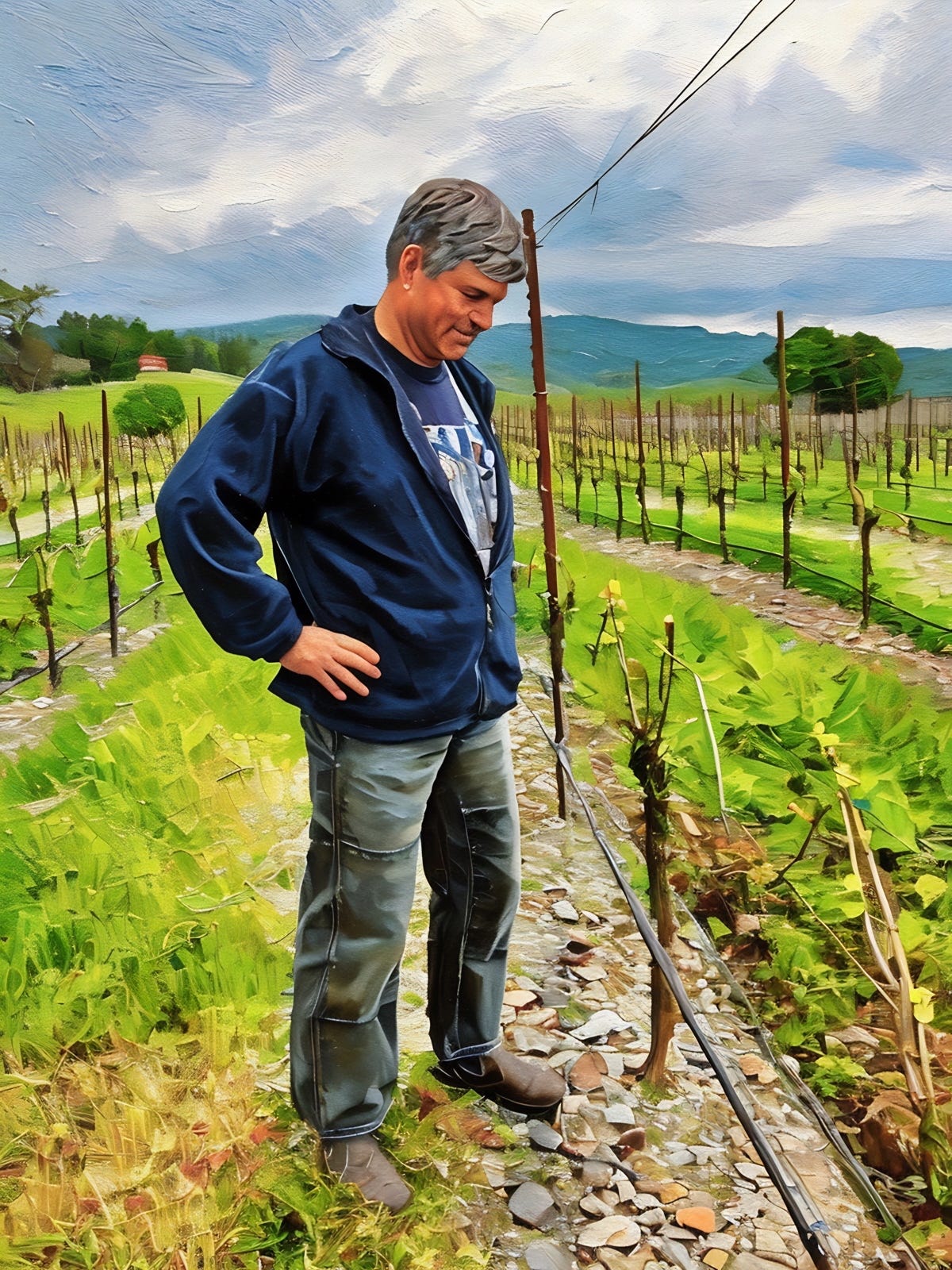
First, some remarks: Greg La Follette, the co-owner/winemaker of the Sebastopol-based Marchelle Wines, asked me to help flesh out a story about an “Old Winemaker,” based on his own life. Although not autobiographical (literary license taken), this is a device that gives Greg an opportunity to share his outlook on life, viticulture and winemaking, and the codes he lives by. The illustrations are all from photos I have taken of Greg and his vineyards over the years.
This turned out to be one of the easiest things I have ever done because 1) I’ve always appreciated wine in ways similar to Greg, and 2) Mr. La Follette never goes a day without wearing his heart on his sleeve.
There is, in fact, an entire international community of wine lovers and vintners who have followed Greg’s every proverbial move and escapades for well over 30 years. Like for most of us, his was never a straight and orderly path, but he has always been known as much for his passion as his scientific mastery of the craft.
When Greg sent me the bones of what he had in mind, he attached these thoughts:
“The story should be about an aging winemaker who has become care-worn and raggedy through the years of devotion to his wines and the vineyards he has come to know so well. He cannot, maybe, keep up with the new-fangled ways of automated punch-downs and pneumatic tank presses, but his wines always became REAL to the people who drink them because they have a ‘Cellar Magic’⏤something that only comes from a lifetime of using one’s own hands, and stiffened back, to make the wines.
“No matter what, though, this Old Winemaker still looks wonderful in his wife’s eyes because she will always feel for his passion and compulsion to push the dragon’s tail, notwithstanding the busted, gnarled fingers, crooked nose, malfunctioning limbs, and all the other worn-out parts that have been spit out onto the gravelly, pockmarked road he has chosen to take.
“I’d like it to be about a winemaker who, now more than ever, is feeling his mortality, but whose life is still fueled by the love of his family, living wine with one’s entire being, letting the land and vintages speak first in order to produce wines as they are meant to be.”
Ecce viticola. Behold the aging winemaker. Saying that, I invite you to enter the mind, or inner workings, of a winemaker whose long career has been very well spent indeed...
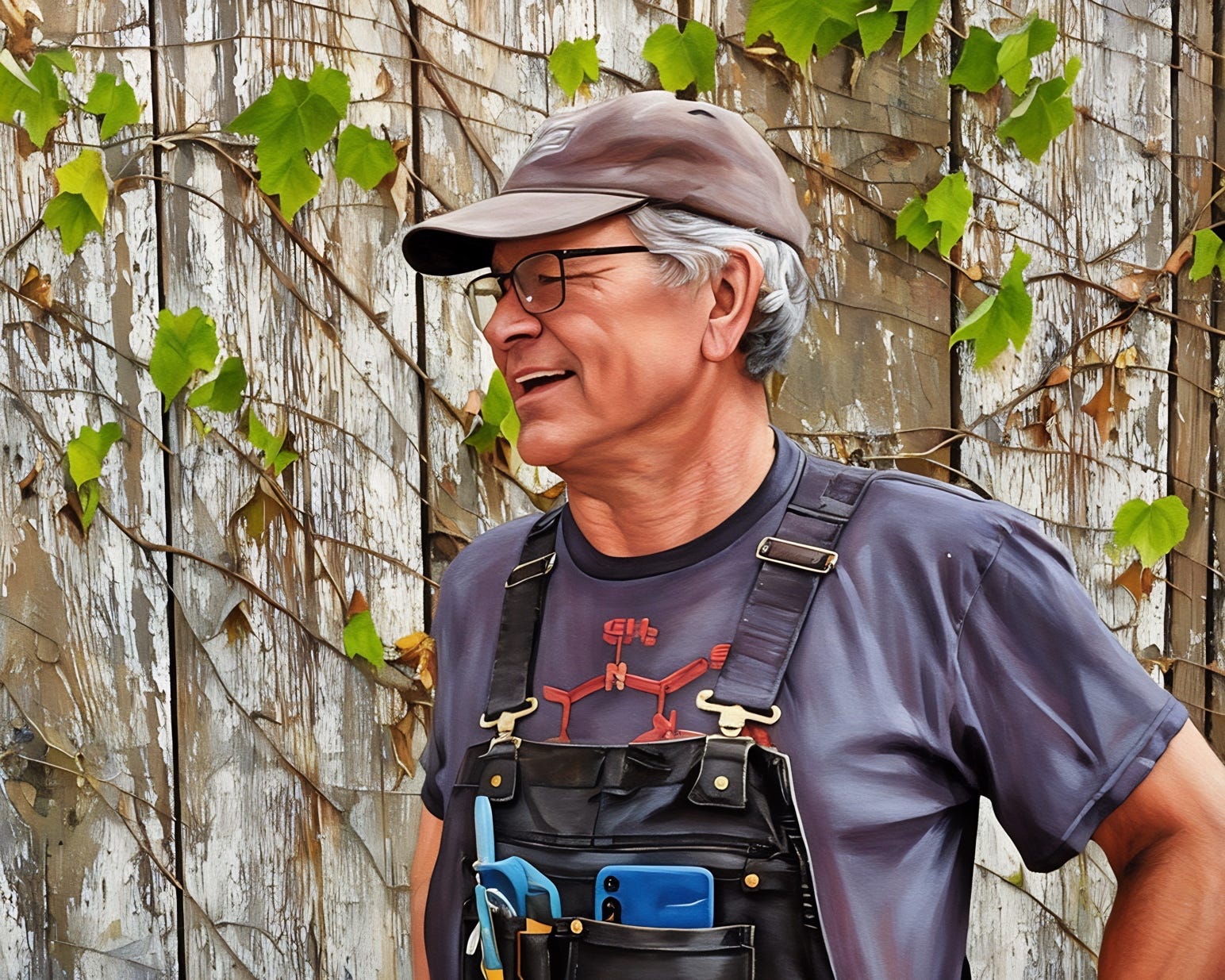
The Old Winemaker
There once was an Old Winemaker. He had not always been old (though the cellar workers of the area thought so). In fact, in his youth he trained to be a winemaker in the usual ways: Absorbing the best techniques and practices at the local wine school, apprenticing with a master, learning through mistakes before being allowed to make his own wines. Then continuing the process of making new mistakes, which become part of the ways of Old Winemakers—turning the bad turns into opportunities to make good, many of them becoming the best and most cherished wines of all.
And above all, marrying a good woman.
Well, the winemaker had many of those opportunities over the years, and he married his good woman. Their children grew strong and good at jumping headlong into life, while working in the vineyards or winery according to the demands of each season. Winemaking is an intellectual task, but the winemaker always considered himself the luckiest man on earth because he was able to do all the work with his own two hands, alongside family and friends⏤producing their wines. He felt contented by the love given back from the soil they cultivated, the fruits of the vines as much as their labors.
The years came and went, and the bottles of wine produced by the Old Winemaker stacked up in a cellar library first started by his own father, like so many sheaves of memories in the book of life. The best moments were when the Old Winemaker’s friends and family went down to the cellar to select a bottle, as if stepping into a time machine. Each label brought back memories of each year, and each vintage had its own story that was part of the family’s story as well.
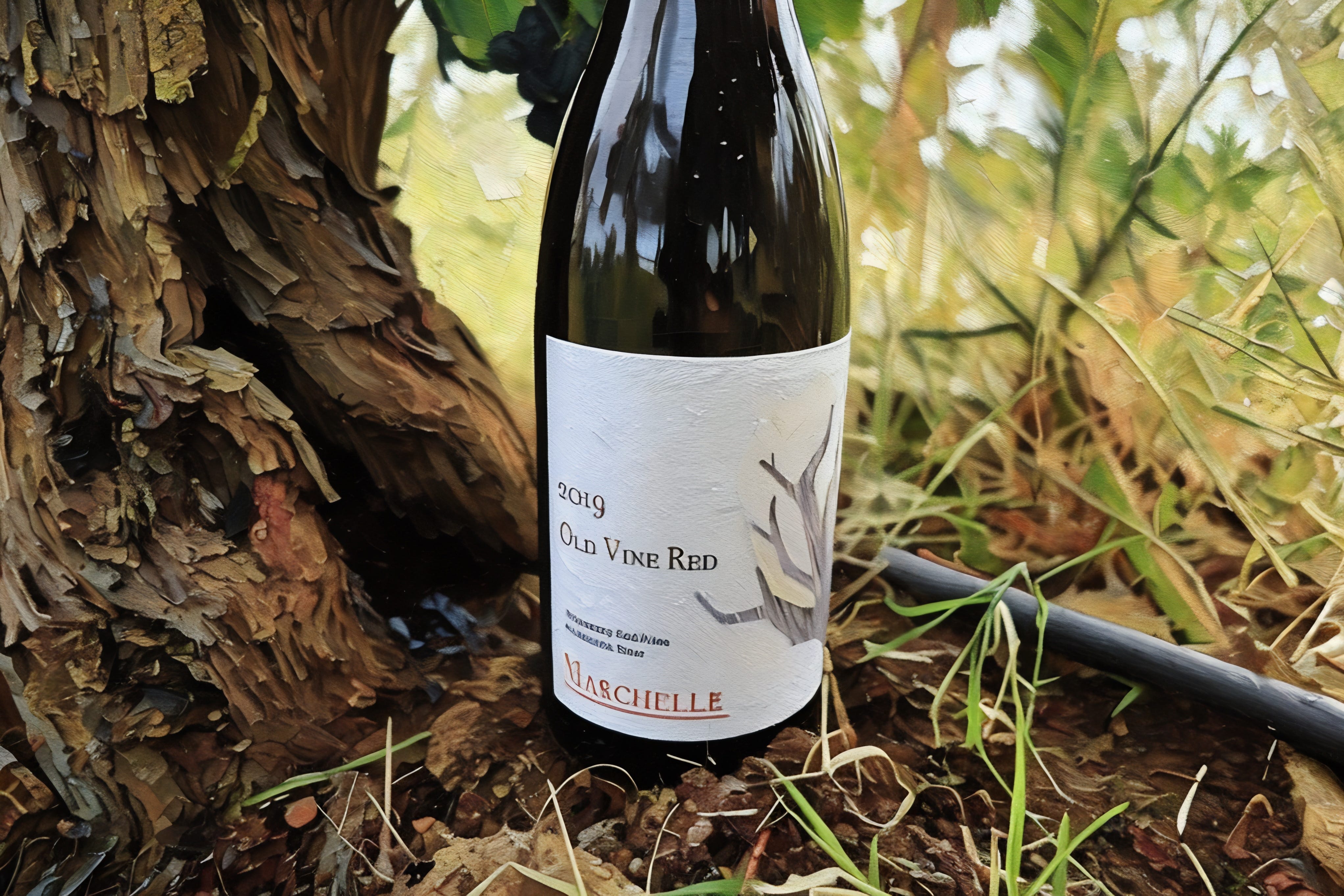
When the cork was pulled at the table and the glasses filled, the aromas of each vintage and each plot of land filled the air, telling a unique story about sun and rain, struggles and triumphs, old partnerships, regrets, promises anew. The Old Winemaker would raise the glass to his nose, take in the aromas and smile at the memories flooding back, knowing that the life of a winemaker was always like the life of a living, breathing, constantly changing wine. Not just that, but also promises, so many promises in every prospective vintage—one more chance to change lives, train new sets of hands, fulfill the destiny of grapes and vineyards.
The Grape
For years the Old Winemaker bent his will and efforts of his family towards this task, in service to The Grape. The hours and cellar practices conformed to the whims of vintages, each one setting the conditions required of him. Each vintage demanded all his attention, and every year his strength and stamina were up to the task. The joy was in the very effort of each harvest. The Old Winemaker reveled in the exquisite rewards of hard labor and thought—quiet listening to the whispers of The Grape—unveiled only after long hours spent in the vineyard and cellar.
During crush, it was as if all time faded away and nothing existed outside of the task of duplicating one of the miracles in the Bible, turning life into wine. The Old Winemaker lived then in a world filled with no room for anything but the language of the yeast, the pointed shouting of vines groaning under loads of fruit, and the rhythm of the vessels cradling the land’s efforts, offering refuge in the cellar like a baby in a manger. Yes, he thought that way. He found this singular mindset easier to comprehend than politics and taxes, or any of the things existing in the world outside the cellar doors, and for years he was ever grateful to his wife for shielding him from many of those concerns.
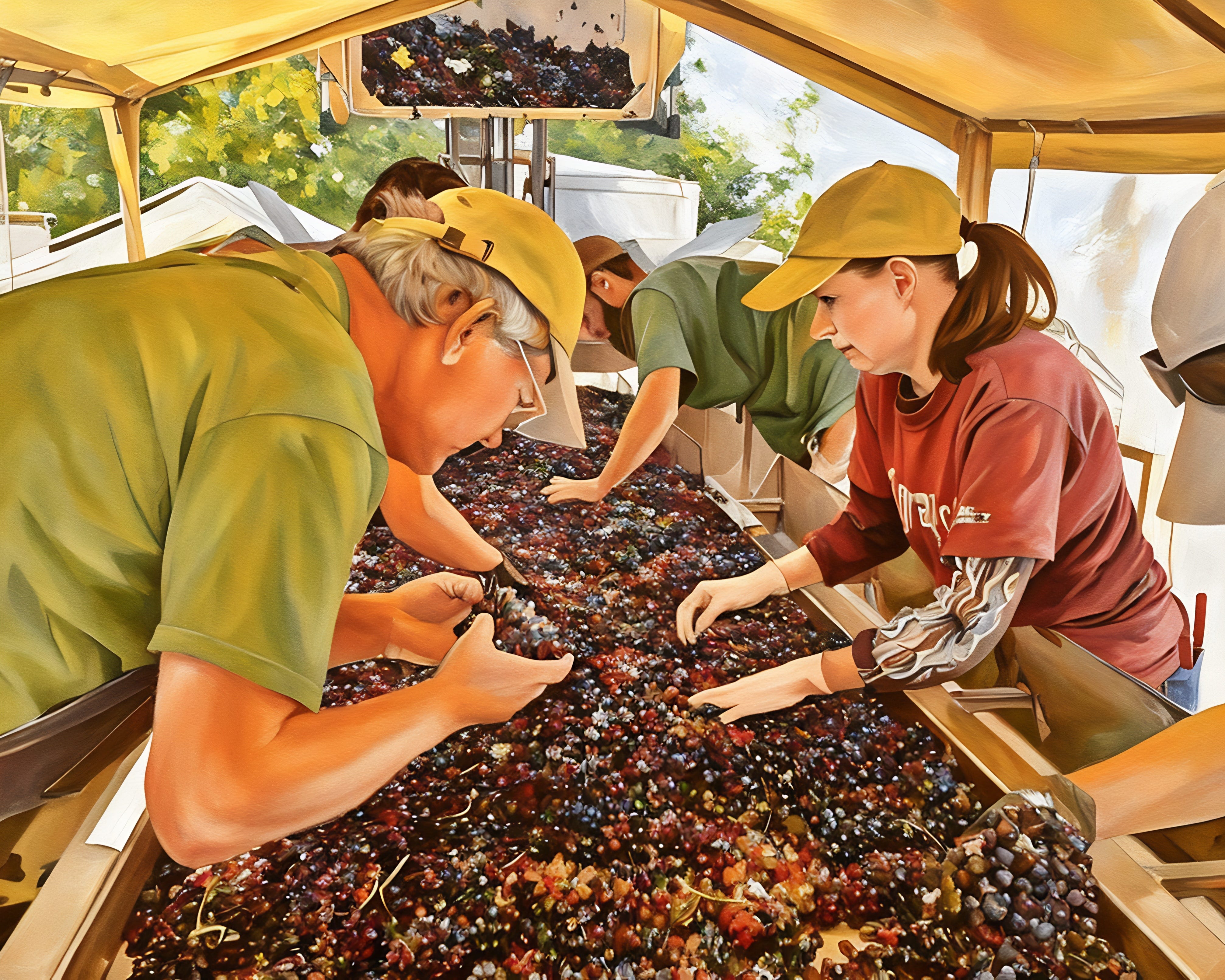
But the Old Winemaker’s wife did much more than keeping him focused and fed during those months of immersion in The Grape. She would also bring to him the drink from the very wellspring that kept his soul quenched and gave him the strength that was needed to survive those hard, unending days. That drink came in the form of their children, brought to The Old Winemaker as needed so that they could all work together, pruning grapevines, sorting grapes, manually punching down the bubbling grape musts.
The Old Winemaker was always conscious of impressing upon his children—with every stroke of a punch-down at the fermentor, every turn of the press ratchet—that one must undertake these efforts with love for the land and with matching respect for the work of the piscardores who labored year-round in the field to bring the grapes into the grateful hands of the cellar crew.
Every drop from the sweat of your brow, the Old Winemaker told his children, was to honor all those who had toiled to bring everything to fruition. That there is no dishonor in hard work, nor even in the smallest tasks. The fruit itself benefits from the smallest tasks, and deserves only the best of one’s efforts. This was a message of not just love but also grace and humility in deference to Mother Nature.
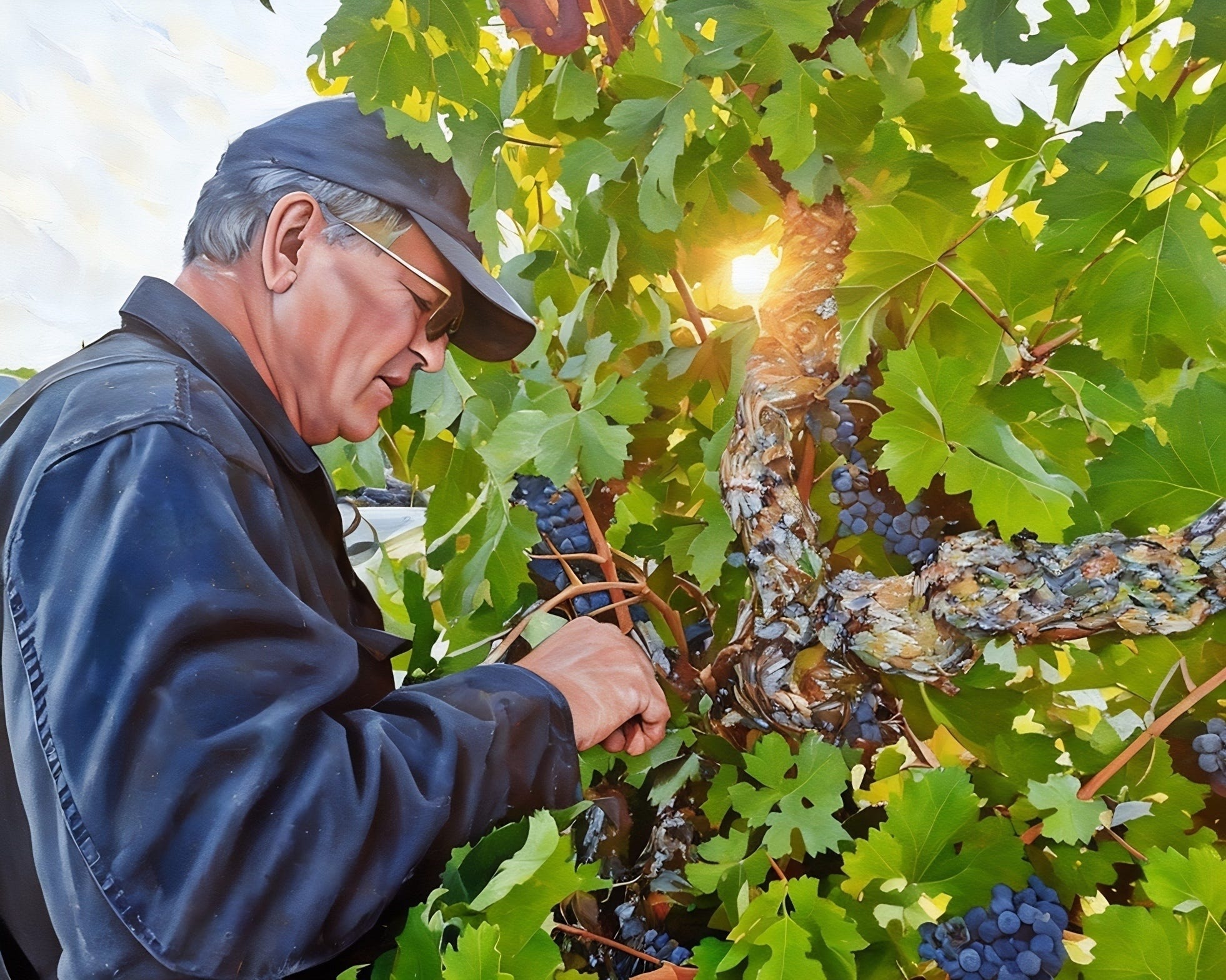
At the end of each day, when the Old Winemaker was finally able to rest for a few short hours, he felt that the amount of effort expended and joy that was gained could be measured by the length of time that those feelings lingered while he laid in bed. In the arms of his wife, the Old Winemaker found the beauty and peace giving him reason to live the life he chose.
If a harvest allowed little sleep at all, and the sun rose with a tank still in need of shoveling out into the press, the morning’s first sign of light would find the Old Winemaker and his wife quietly working side-by-side, knee-deep in the middle of drained pomace, showing their love for each other through their shared task. With every ringing sound of a shovel smacked into the pomace, then raised over the shoulder and fed into the press, it would be like rhythmic whisperings of sweet nothings to each other, both grateful for what was gifted to them by the land.
Cellar Magic
His wife was indeed the Old Winemaker’s strength, his not-so-secret weapon. To be sure, he relied on her own strength and resourcefulness to pull him through the tougher harvests; to stay up with him during the long nights required to turn the sun-ripened fruit into what the Old Winemaker called Cellar Magic. Cellar Magic was not just a thing, like the process of winemaking or the cumulation of product resulting from careful analysis in a lab, although the Old Winemaker, celebrated for his science, understood all of that and more.
Cellar Magic was not a noun or a verb or any one element of what the Old Winemaker did or even how he felt, and he felt plenty in each new load of grapes. Cellar Magic was what came gradually to the life of the Old Winemaker, following years of living literally in vineyards and knowing individual grapevines, sharing those untold moments with family, friends, partners and colleagues. Cellar Magic entailed staying ever-present and faithful to those messages in the bottle casting their way through the love of the land itself. You are always best at what you love most.
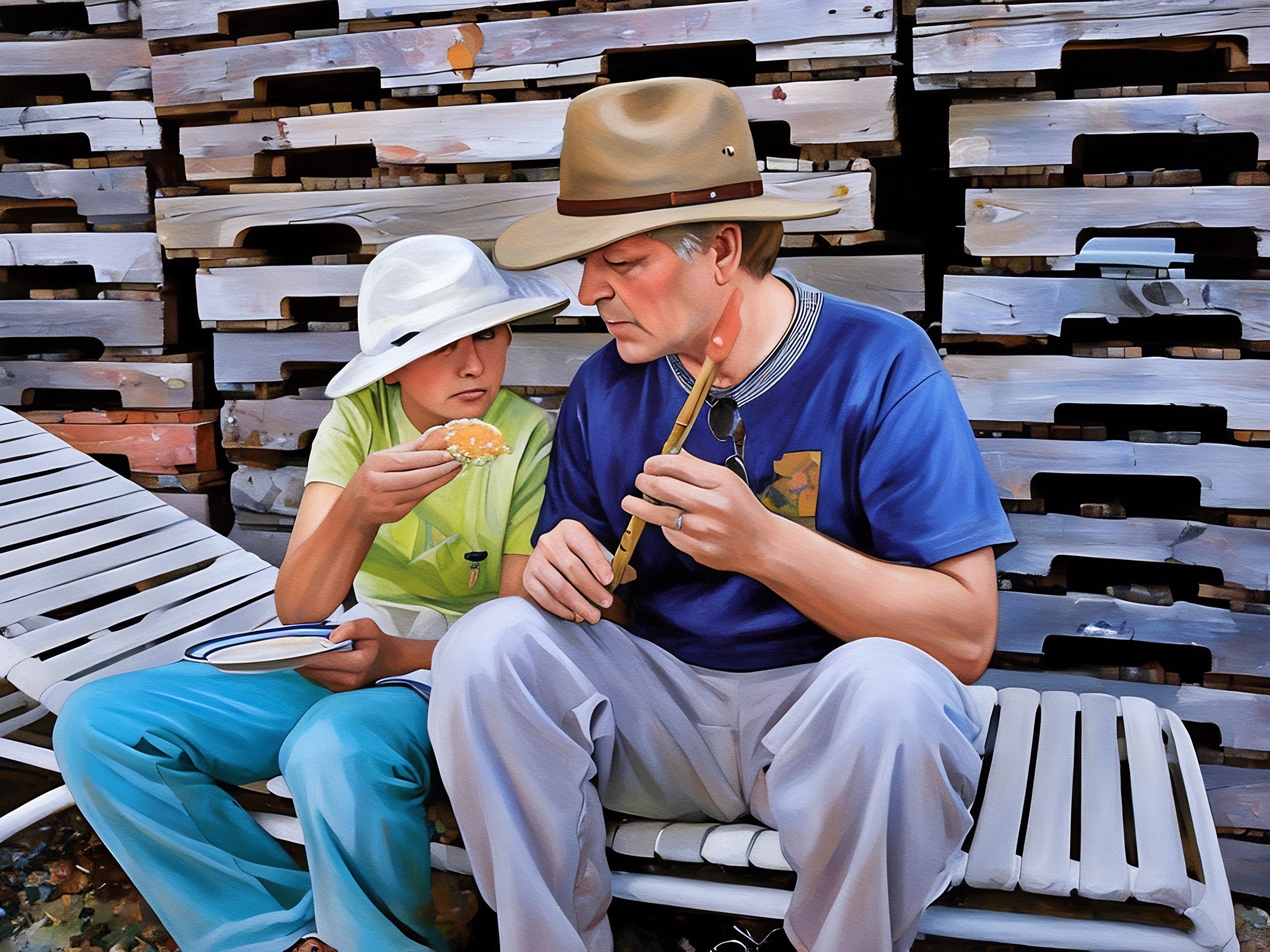
In this way, the Old Winemaker was not only a translator to his children of a life lived to its fullest, he was also a translator of the speech of vineyards. Wines, he knew all too well, do not make themselves. Each terroir relied on the Old Winemaker to make their dreams known. If he was faithful to those dreams—and to the speech of soil, of plants, and everything around them—the Old Winemaker knew that the land would invite him to intermingle his own dreams with what it had to offer. It demanded science, but also being human; no different from being with family and friends.
In his mind, it was the opportunity to add one’s own voice to those of the ageless wind, to the relentless sun and rain, to the ancient dreams of rocks and soil. To the Old Winemaker this was always a humbling experience; a privilege, never to be taken lightly. Who else but those who first serve the land are allowed to add a letter, however small, to the words of a world that can be heard, and made tangible, in a tulip shaped glass?
Who would tell their story? Who would be first to kneel before the quiet, unending strength of the land; to listen, with practiced ears, to those elusive thoughts spoken by grapevines in their element? The Old Winemaker was awed by this responsibility because he already knew that it had taken him a lifetime of listening, all the while feeling he was only beginning to comprehend what was being said. If there was Cellar Magic to be had—the possibility of being part of the land’s voice—this was something to be gained only by an accumulation of experience over an entire career.
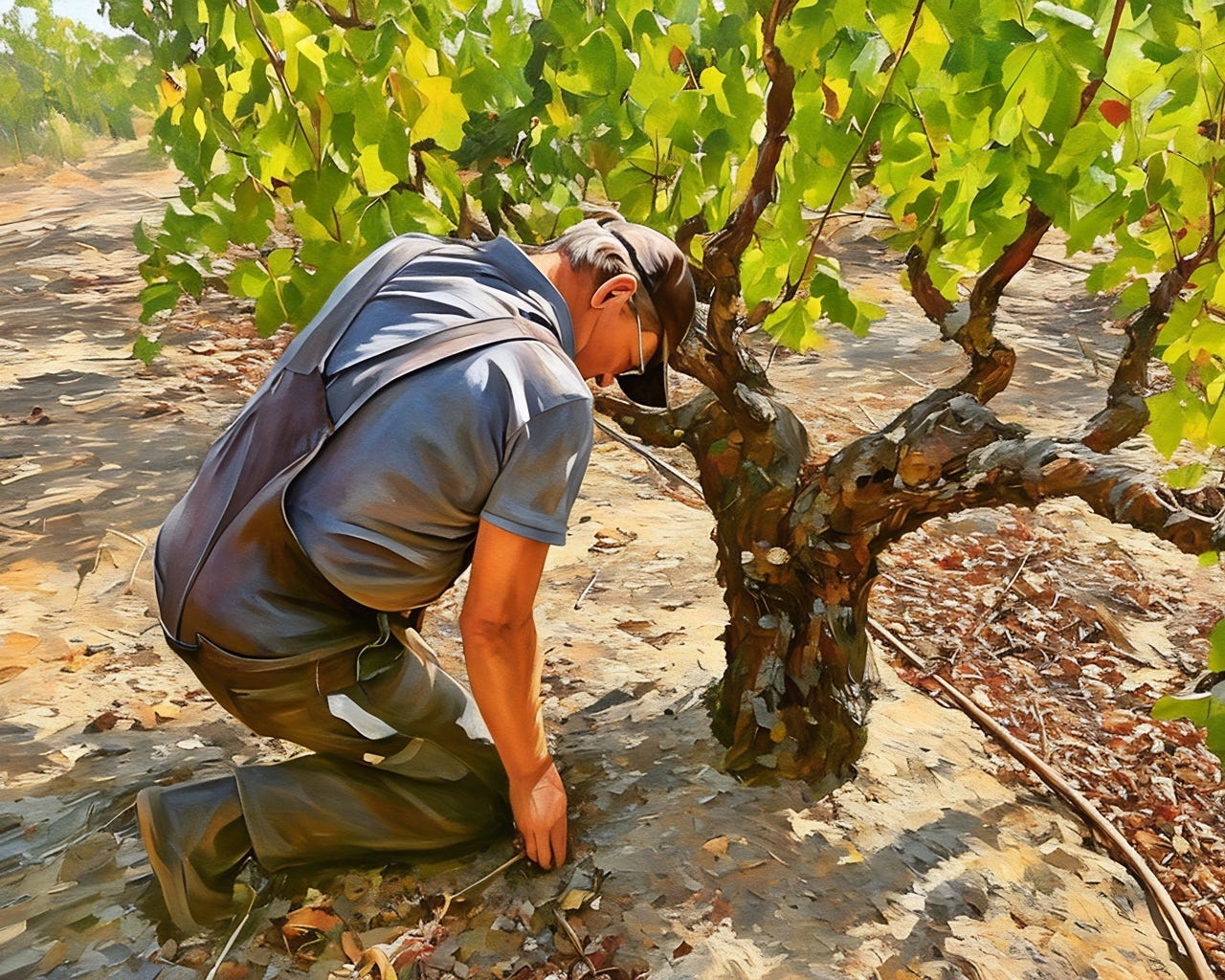
The Old Winemaker was patient, though, the way his own parents had taught him to be—to listen carefully, before speaking or acting. Every passing year was a matter of increasing faith in the intrinsic wisdom of the land and doing its bidding, even while being compelled to respond to the endless demands of each vintage. Each year added a little to his depth of understanding. Enough to know there would never be enough years granted to his life to fully comprehend the entire speech uttered by each place, every harvest, the constantly changing dictates of Nature.
The speech of a single plot of land, thought the winemaker, needed to be heard and absorbed in terms of generations, not a single life, no matter how well-lived. In this realization, the Old Winemaker gained a greater measure of respect for the land, adding to his book of Cellar Magic.
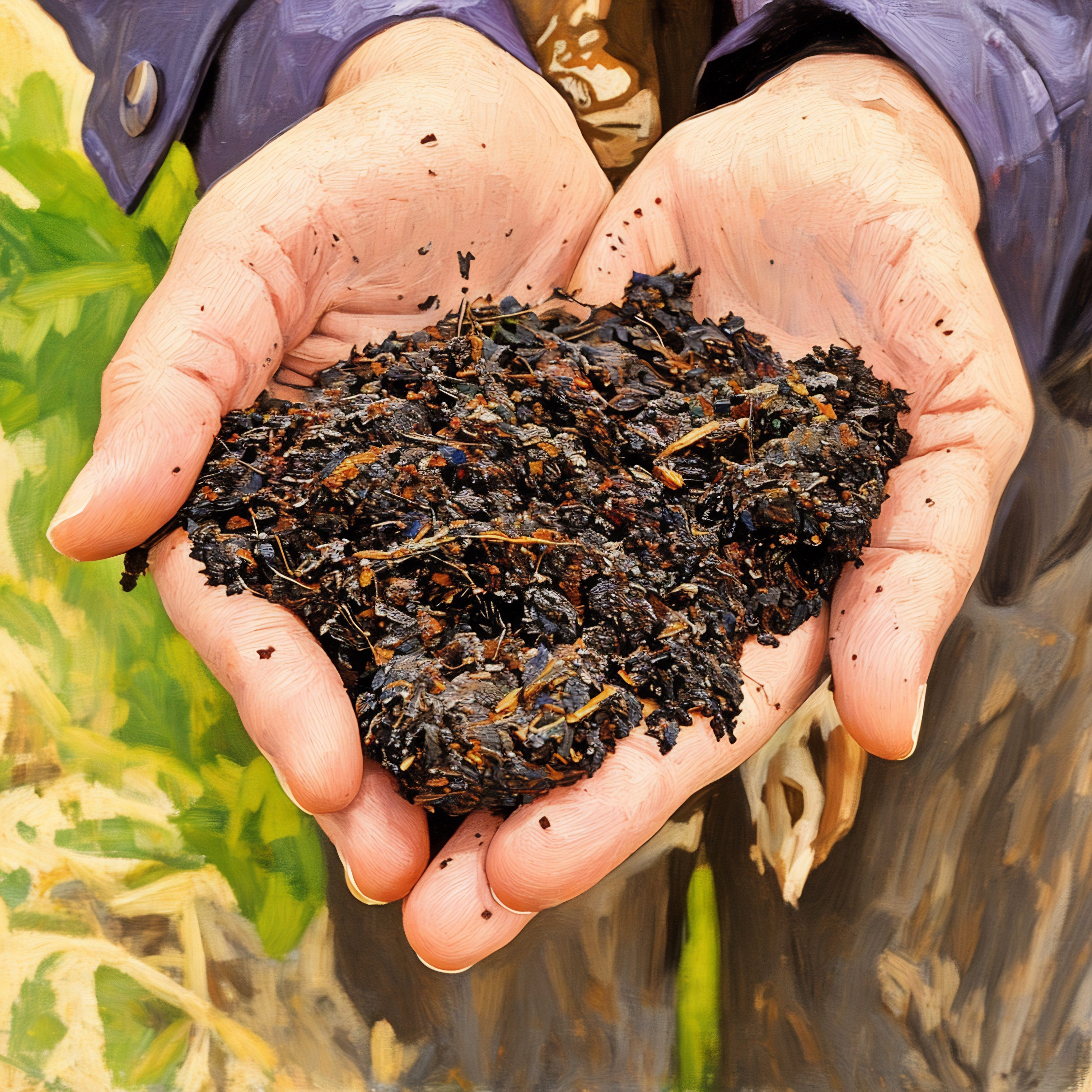
The Big Harvest
Then there came the year when the grapes ripened more quickly than the Old Winemaker and all of the winemakers of the region put together could handle. Spring arrived late, the early Summer was wet and the Fall rains came early. All of the cellar hands waited with anticipation for the first grapes to ripen. The traditional week of the first day of harvest came and went, and still no ripened grapes.
The vines, for their part, had responded to the Spring rains with luxurious growth, deep thick leafy canopies, and an even more rapacious desire to grow new leaves, distracting their attention from the job of ripening grape clusters. Lateral shoots sprang from main shoots faster than they could be removed by the children of the Old Winemaker. He sent the kids out into his growers’ best vineyards to try to check the unruly growth, much as an old schoolmaster would send his best scholars to try and bring order to a school’s recess-yard after its pupils had been cooped up too long in the classroom.
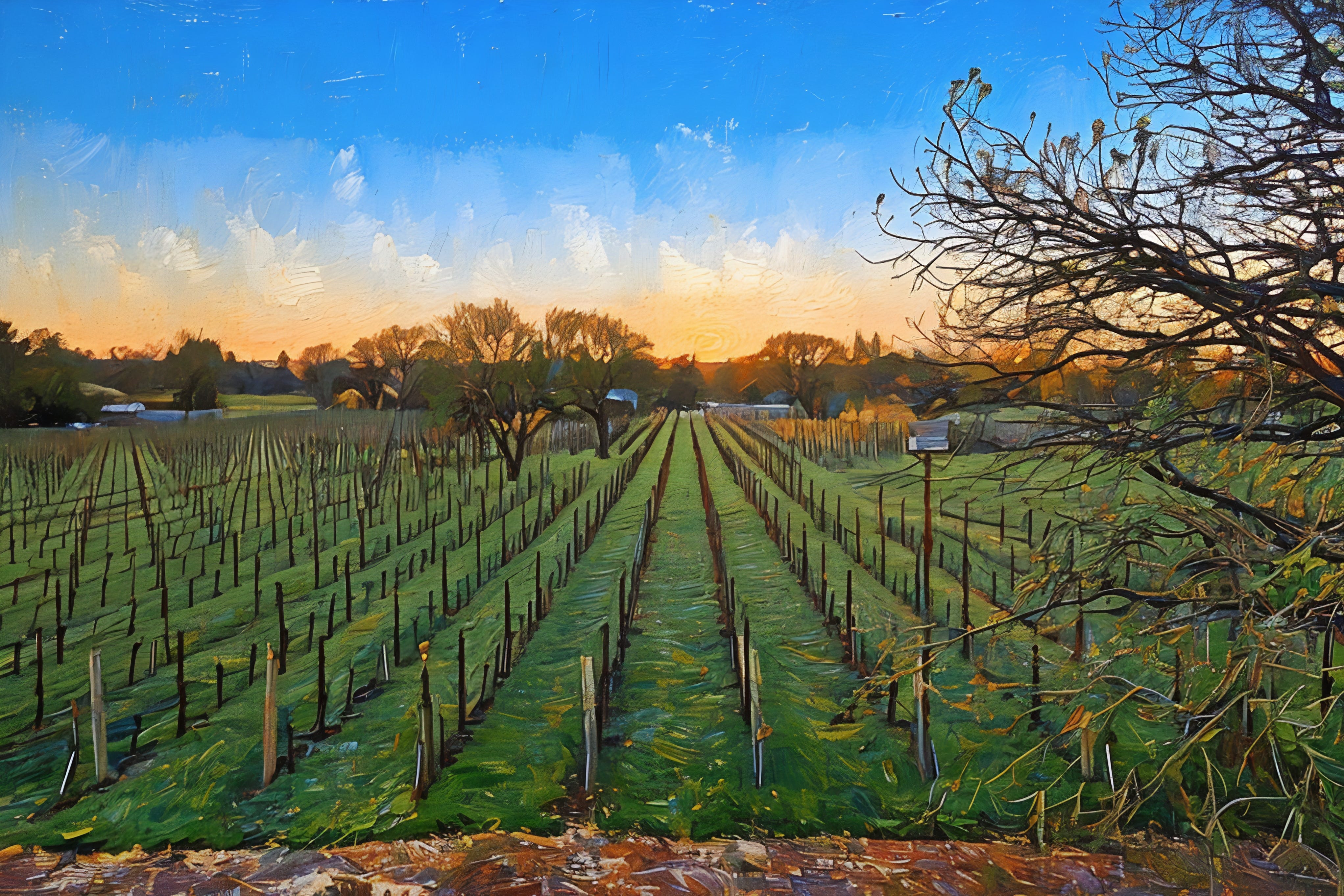
Oh, the sugars would eventually come, the Old Winemaker knew, but he also knew that constructing color in the thin-skinned Pinot noir was an expensive proposition for the vines. Without an early water stress, the vines would just want to channel their energy into canopy and canes. Who could blame the grapevines? It was in their DNA. As survivors of millenniums of evolution, they knew that when water was plentiful they could keep producing more leaves late into the season while being able to capture all the energy proffered freely by the sun.
The grapevine plant is ultimately a climbing animal, the Old Winemaker always said, and would keep sending new tendrils towards the sky as long as there was a generous currency of water, nitrogen and sunlight. It needed either the chastisement of a vintage or whips of hands in the field to slow down its growth. To get the vines to focus attention on berries and produce color in the clusters, the vines must first be made to feel that their resources for creating more leaves were running low.
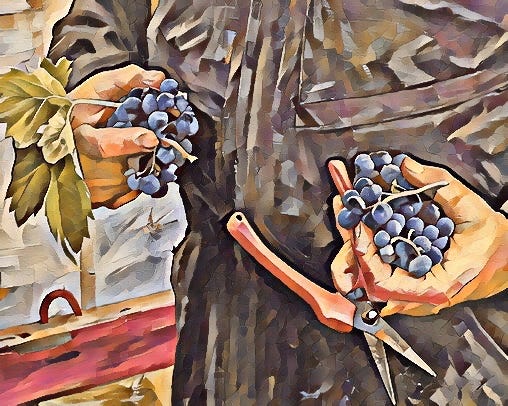
The Old Winemaker also knew that if a vine begins to feel a lack of water and knows that there will be no more coming for the year, it will start to say to itself, “Things are getting a bit tight around here, mates, not much more leaf production to be done—let’s start making our fruit more colorful and tasty for the birds, so they can help us spread our seeds.” The grapevines are like me, mused the Old Winemaker. Like any other living thing, they want to fulfill that ancient biblical command to be fruitful and multiply!
The Old Winemaker thought of his children—more of them, perhaps, than most families deserve—and how they were now ironically out in the vineyard, asking the vines to do the same thing he himself had done as a younger man. He knew the language of the vine and spoke it well. It was, after all, a language of life itself, only dressed in leafy robes. The children were motivated in the same ways as their vinous charges, eager to grow and reach adulthood, to complete that circle of life.
On this particular vintage when the grapes ripened late and the rains threatened to come early, the Old Winemaker knew that his own turn of the cycle was running closer to its end than when he was younger and at full strength. As the first of the tardy grapes came into the cellar, he felt more tired this year than he had ever felt before. As he watched the older children standing at the sorting table, he marveled at their strength, stamina and dexterity, even surpassing his own.
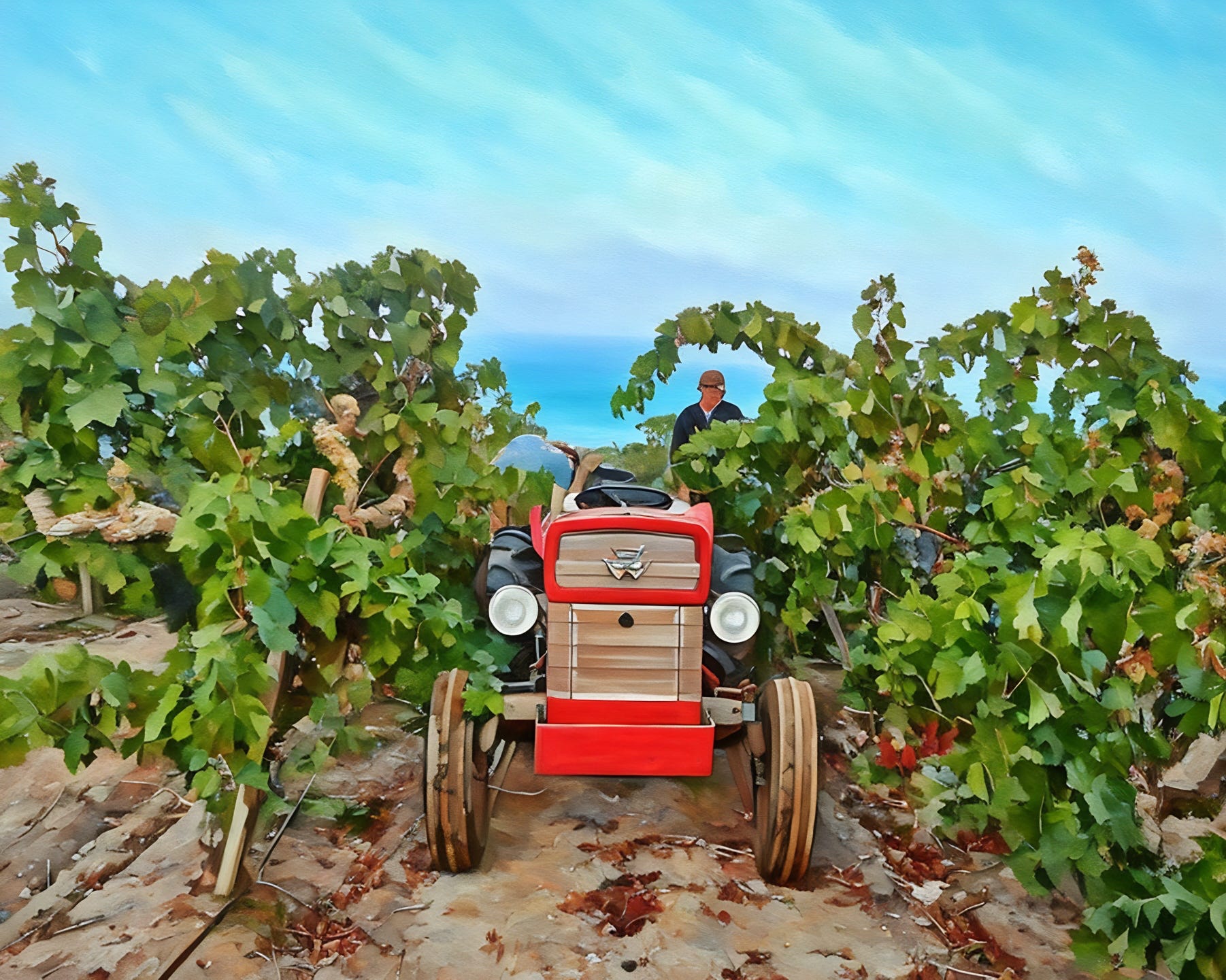
He would need every one of their limber backs this year, if the grapes were to be addressed properly and their voices heeded. He knew from experience that this year there would be too many different fermentations going on at once to allow for any semblance of order, or sleep. He would need all of the skill and patience his years of work with the grapes had allowed him if he were to give to them what they deserved: His very best effort at translating their utterances, to reach a happy ending—wines they could all be proud of.
So the grapes came—in a great surge, almost every variety and vineyard at once, and with much complaint about the abuse of weather they had taken that year. They needed more care than normal, more attention than what a more typical, leisurely year would have granted. Every afternoon the children’s clever young hands would dart back and forth, feverishly culling the less perfect clusters from the masses of fruit carried by the sorting belt.
The work going on into the night demanded a bigger than usual contingent of strong backs. Longtime friends and fellow winemakers dropped by to pitch in, even after long days tending to their own wines. There was the elemental task of hand-plunging the bubbling vats of furiously fermenting musts. The tricky vintage demanded that temperature, color and extract be managed more carefully than ever. At this moment in time, when the Old Winemaker was feeling his own physical strength waning when needed most, he was ever grateful for the extra care and unbidden labor. In this hour of need, the ailing Old Winemaker was thankful for all those previous years spent cultivating not just grapes and children, but also lasting friendships.
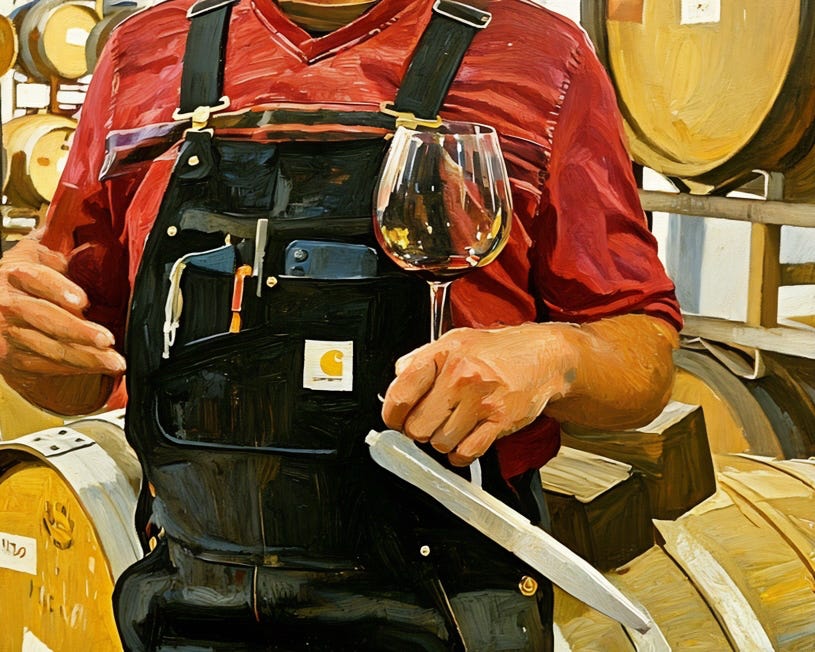
Long days turned into unending nights. Still the grapes came in relentless waves, requiring 24-hour shifts, each day bleeding into the next. The Old Winemaker was feeling every bit of all his past vintages in his bones, his sinews now tiring to a breaking point. With exhaustion comes dearth of alertness, and at that point, when the body surrenders to fatigue even as the will of the land compels full response, the Old Winemaker could only act by feel and instinct, like navigating a dark yet familiar room.
When, finally, his left shoulder gave out to the pain of overuse and he could no longer lift his left arm to even touch his ear, the Old Winemaker began taking the shortcuts in the cellar that must only be done when one has run out of time and decide which tasks need to be prioritized. This is for not lack of care, the Old Winemaker knew, but rather submission to the commands of Nature; an act of bowing to a power higher than any human’s, notwithstanding the combined efforts of all the extra hands that could be mustered from other wineries and places within striking distance of the Old Winemaker’s cellar.
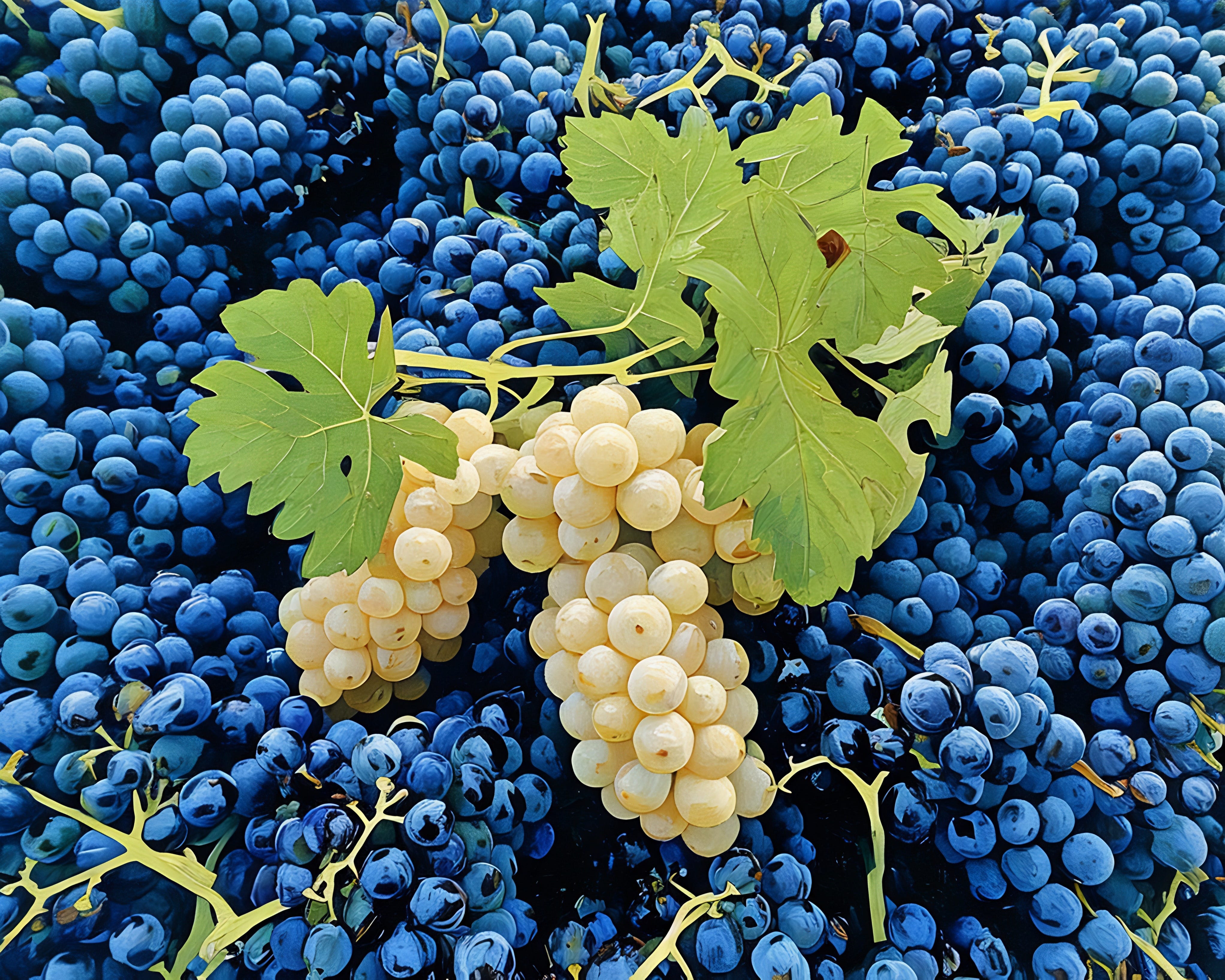
Transformation
The Old Winemaker’s respect for Nature was such that he always had absolute faith in the power of vineyards to express themselves in wines. This came from his grounding in science, and hard work in the field. Now, after an accumulation of years and years of harvest after harvest, the Cellar Magic the Old Winemaker had gathered into his being was being transformed once again.
Only by acknowledging that this vintage was more than he could handle could the Old Winemaker finally take this next step in the long journey of his life devoted to The Grape. In a way, it was love itself—the devotion to this ancient craft of turning the fruits of the land into a celebration of life—that was the basis of this transformation.
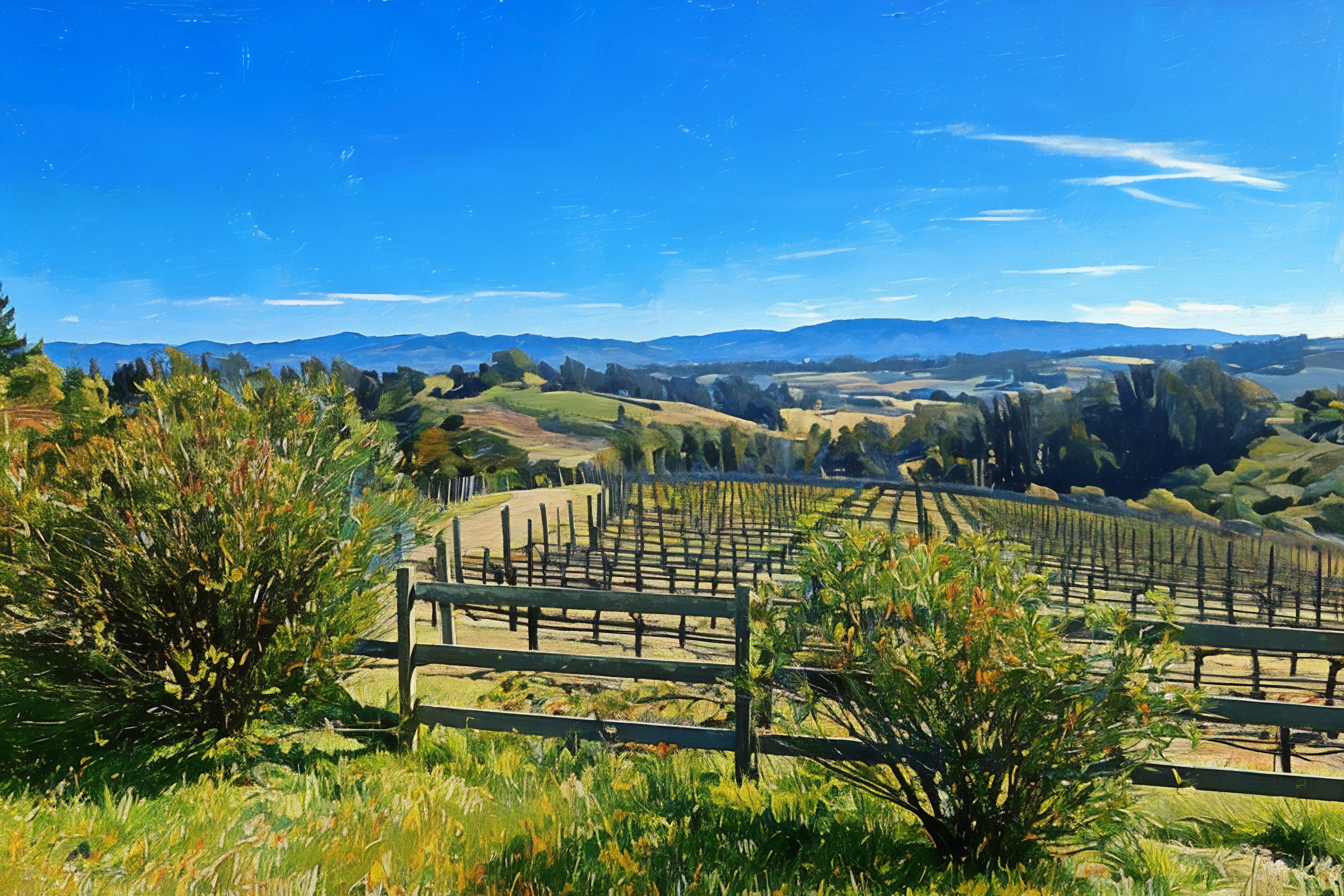
Even while brushing dangerously close to mortality, he found the strength to make fulfilling wines through the love of family and friends, by the good graces bestowed upon him by growers he had known forever, and in the end, tender mercies shown by the vineyards themselves. Each of them showing their true colors, by showing up en masse.
In accepting a more complete partnership, the Old Winemaker felt like he could finally hear a voice that was once barely discernible, but now clearer than ever. It was a call confirming what he suspected all along—that you always get back more than what you put in, at least by his own estimation—and he was humbled by it.
It was then that his life, his loves—his children like wines, and his wines like children—tasted sweeter than ever before. This, he felt from the bottom of his heart to his creaky old bones, was what winemaking is all about.
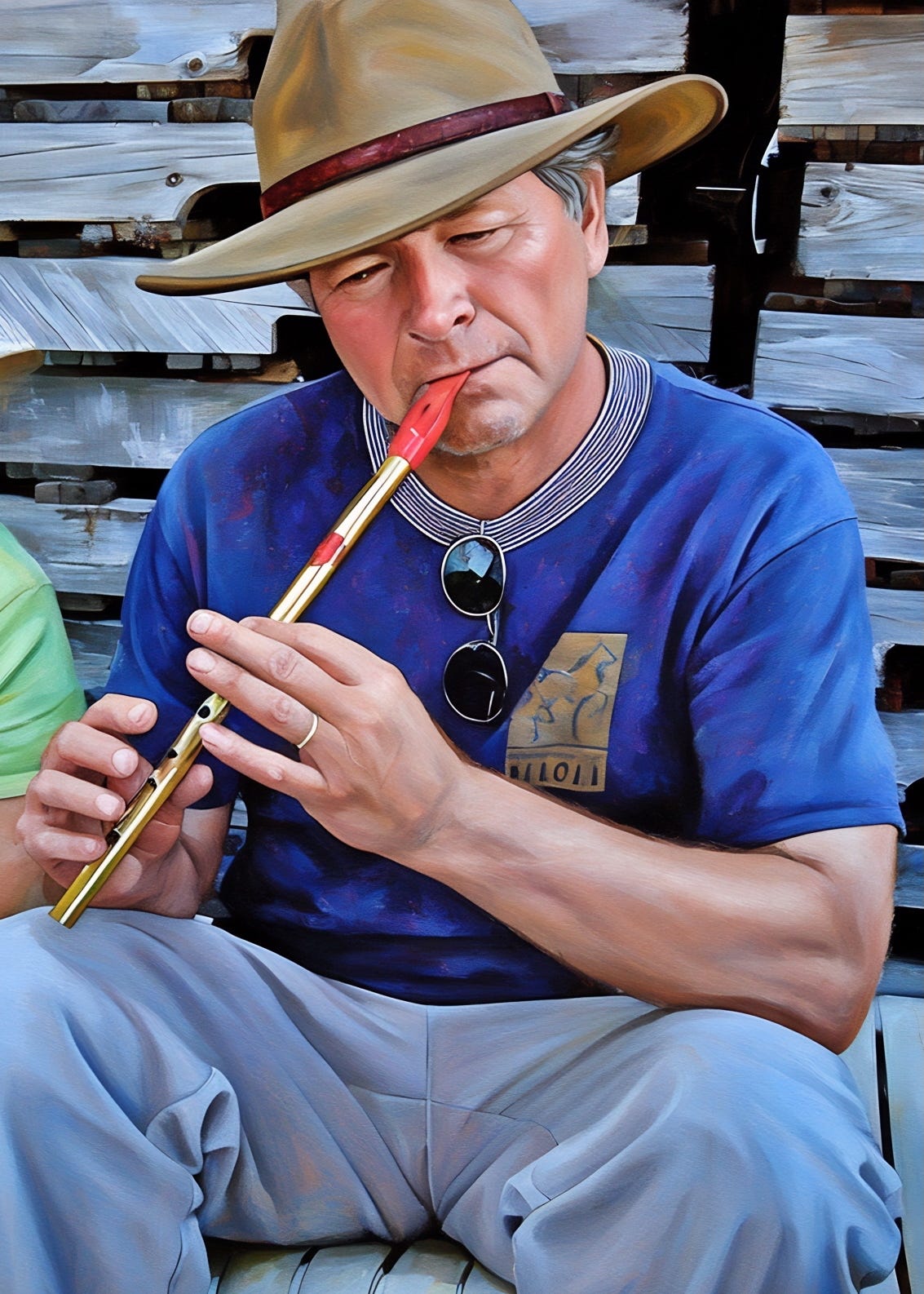
Well done, both the writing and the photo manipulations, Randy.
I know the feeling. Not from winemaking but from 50+ years in retail, wholesale and marketing in the wine industry.